
Insights from SILL 5:
ZeroW Knowledge-Transfer Workshop in Spain Highlights Innovations to Reduce Food Waste
ZeroW partners come together in Almeria to showcase innovative technologies and collaborative strategies aimed at reducing food waste and building a more sustainable food system.
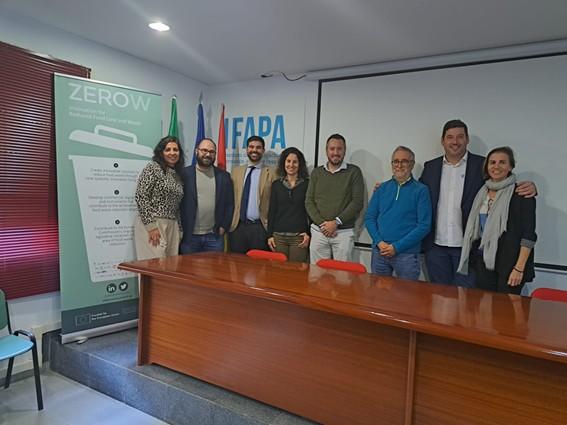
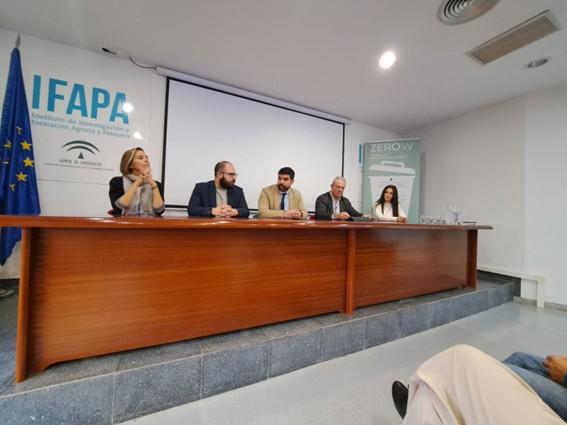
The Spanish project partner IFAPA held a knowledge-transfer workshop on 27 November in their facilities located in La Mojonera (Almeria) to share the progress and results achieved within the European ZeroW project, with a particular focus on the work carried out in SILL5 (Systemic Innovation Living Lab). This living lab is dedicated to the early classification of tomatoes using non-destructive VIS-NIR analysis techniques applied to individual fruits and targeting ugly food identification and organic and non-organic differentiation based on innovative technological solutions.
Organised in collaboration with the other partners involved in the living lab - Multiscan Technologies, Grupo La Caña and CTA - the event aim was to share the results and raise awareness on the significance of the food waste problem bringing together researchers, companies and organisations from the agri-food sector to discuss innovative solutions and how to continue reducing losses and food waste across the whole value chain.
Understanding the Challenge and Exploring Solutions
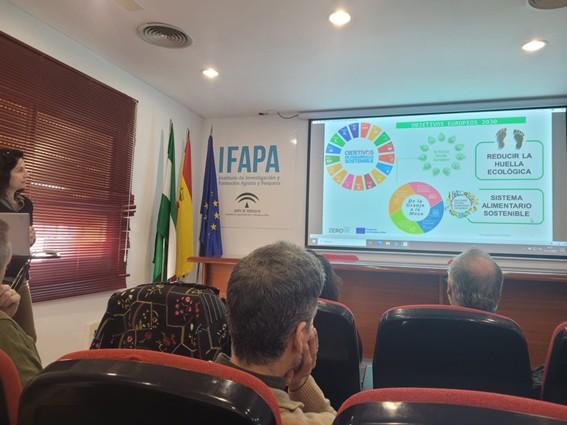
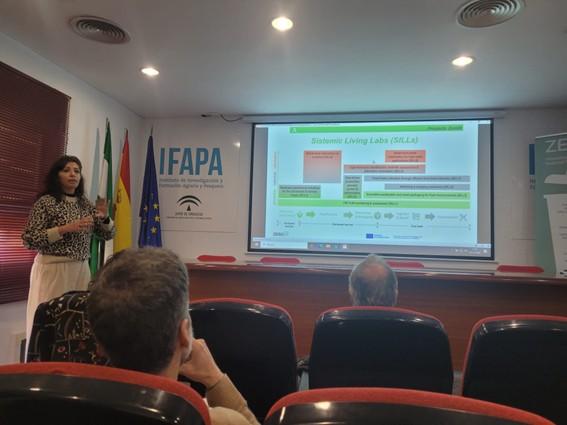
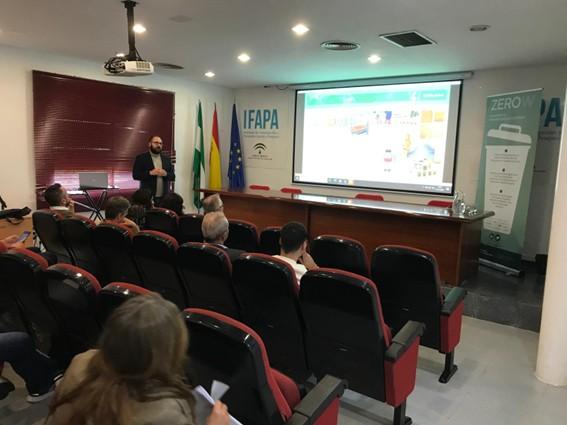
The workshop opened with a presentation on Europe’s goals to move towards a food system with minimal losses and waste, delivered by Emma Cantos-Villar (IFAPA Rancho de la Merced) and Víctor Ortiz Somovilla (IFAPA Alameda del Obispo). In addition, Irene Domínguez Pérez (IFAPA La Mojnera) gave an overview on the technologies and innovations for an efficient food system integrated into ZeroW. Moreover, Félix Gómez Sánchez from Multiscan Technologies presented the topic artificial vision technology and its impact on reducing fruit and vegetable waste which has been key in SILL5 solutions. Finally, Alejandro Fernández Moreno from La Caña Group described in detail how their company innovative solutions to combat food waste in the fruit and vegetable sector are making a difference and acting as a innovation reference in the sector.
Participation of FOLOU Project and Espigoladors
The event included a enlightening presentation by Héctor Barco from Espigoladors which is a non-profit organization aiming to promote a major shift in how Europe understands and tackles food loss at the primary-production stage, laying the groundwork for stronger food-waste recovery across the continent. There were interesting insights on the need for a harmonised methodology to measure on-farm food losses and carrying out field studies that reveal where and why edible produce is left behind, focusing on the key data needed to rescue more food before it becomes waste. Espigoladors’ hands-on expertise adds a practical, socially driven dimension to FOLOU’s project demonstrating how improved measurement can translate into real economy.
Round Table: Efficient Management and Food-Waste Prevention
The session concluded with a round-table discussion on the challenges and opportunities for achieving more efficient and sustainable resource management. All speakers shared a value and diverse range of points of views including Maribel Vázquez García, Technical Director of Systems at EsProyecta describing their experience related to consulting, corporate social responsibility, environmental prevention and quality, inspections and calibrations ; Javier Valverde, director of the processed vegetable products business unit (IV and V Range) at UNICA Group, sharing his experience and insight and track record in the agri-food industry including innovation and sustainability projects aimed at reducing food waste; and Andrea Alonso Fernández, Head of Marketing and Sustainability at Agroponiente, sharing their point of view on how to optimise processes, revaluate surpluses and the company's comprehensive approach to transforming waste into value . Lastly, Alejandro Fernández Moreno from La Caña Group completed the table with his key overview of the project and the issues which are still pending of further development.
Participants also discussed key issues such as their organisations’ roles in managing food waste, the technologies with the greatest potential to reduce it, future needs in prevention and management, and priority actions that should be implemented without delay in order to promote the recovery of fruits and vegetables, reduced environmental impact, and fairer access to nutritious food.
Finally, they reflected on which actors in the food value chain from producers and distributors to HORECA, consumers and policymakers have the greatest scope for improvement in moving towards a more sustainable system, stressing the topic of raising awareness specially amongst farmers and customers to make the problem more visible to the general public.
More news from ZeroW
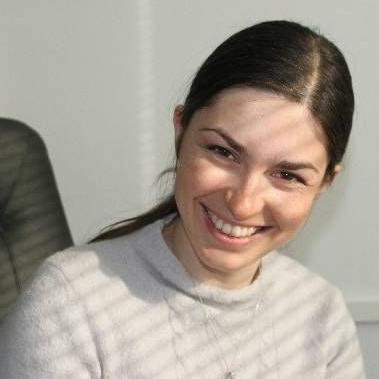
Looking Back at ZeroW: Collaboration, Impact and a Clear Way Forward
After four years of ambitious collaboration, ZeroW reaches its conclusion with impressive results and a clear vision for the future. Project Coordinator Anna George shares her reflections as we wrap up this milestone journey.
ZeroW Knowledge-Transfer Workshop in Spain Highlights Innovations to Reduce Food Waste
ZeroW partners come together in Almeria to showcase innovative technologies and collaborative strategies aimed at reducing food waste and building a more sustainable food system.
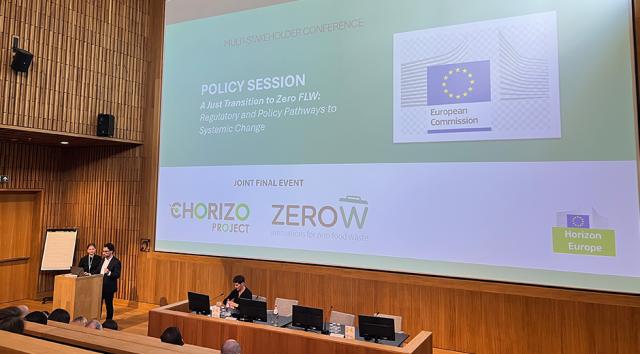
ZeroW Policy Briefs: The Just Transition Towards Near Zero Food Loss and Waste
ZeroW’s policy team has distilled project insights into five briefs that outline how Europe can cut food loss and waste while ensuring fairness, resilience, and progress towards 2030 and 2050 goals.
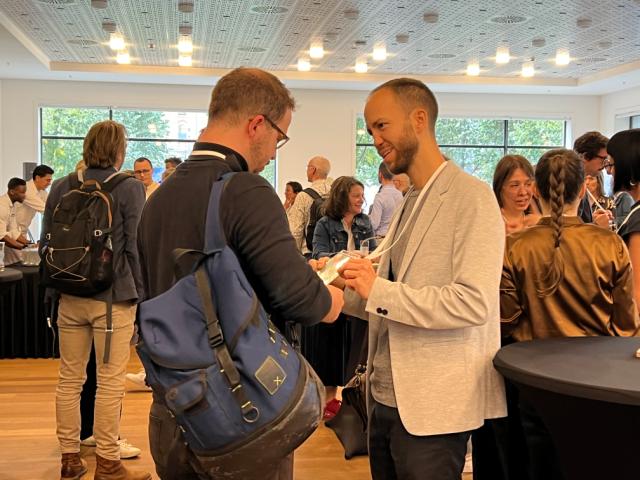
Spotlight on Solutions: ZeroW & CHORIZO Joint Final Conference
On 16 September, the ZeroW and CHORIZO projects held their joint final conference showcasing latest innovations, insigths and solutions to tackle food loss and waste across Europe.
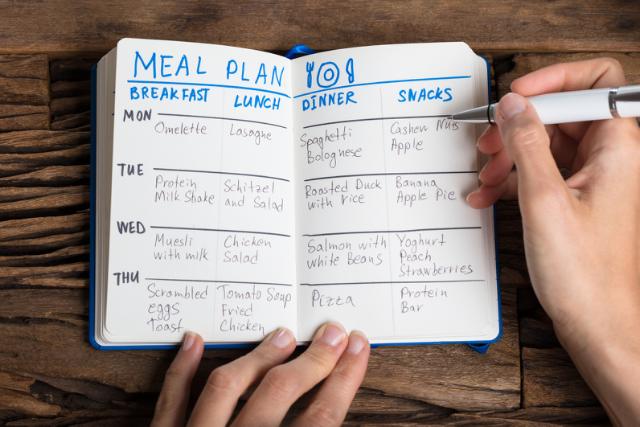
ZeroW Project Open-Sources Smart Meal Planning Prototype to Combat Household Food Waste
ZeroW has launched a smart meal planning prototype - a digital tool that cuts household food waste by aligning shopping and cooking with dietary needs, efficiency, and sustainability, aiming to inspire adoption and scale across Europe.
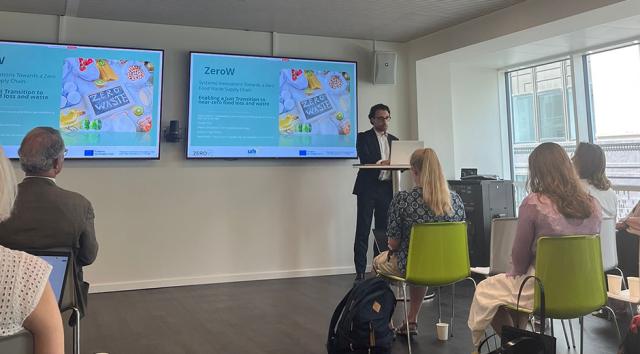
Advancing a Low Carbon Food Value Chain with Policy and Innovation
At a recent EU policy workshop, ZeroW joined key stakeholders from research, industry and the European Commission to present policy recommendations and innovative strategies for reducing greenhouse gas emissions and food loss across the food value chain.
Innovation, Insight, Impact: Discover Solutions to Europe’s Food Waste Challenge
Final Conference
September 16, 2025, 09:30–18:00 CET
Brussels
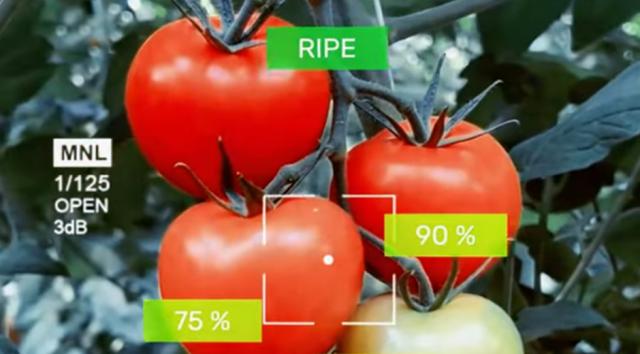
Insights from SILL 3: Smart Computer Vision Helping Greenhouse Producers Cut Food Loss
Advanced computer vision and AI are enabling greenhouse growers to forecast yields more accurately, improve harvest planning, and significantly cut tomato waste at the production stage.
Consumers Back Sustainable Packaging - But Price Still Matters
New survey reveals strong support for eco-friendly and smart packaging, with clear potential for reducing food waste.
Green Deal Projects Leading the Way in Food Waste Reduction
Green Deal-funded projects are stepping up with innovative solutions based on the 3Rs - reduce, reuse, and recycle. Read Green Deal Projects Support Office’s recent article on tackling food waste in the EU.