
From the Coordinator:
Looking Back at ZeroW: Collaboration, Impact and a Clear Way Forward
After four years of ambitious collaboration, ZeroW reaches its conclusion with impressive results and a clear vision for the future. Project Coordinator Anna George shares her reflections as we wrap up this milestone journey.
Anna George
Inlecom Commercial Pathways
After four years of work across Europe, ZeroW is coming to an end with a clear message: large-scale food waste reduction is not only possible, it is already happening when people, technology and good governance pull in the same direction. What began as an ambitious idea grew into a collaboration of 47 partners and more than 140 supporting organisations, all working together to rethink how food is produced, processed, sold and consumed.
At the heart of the project were nine real-life living labs. These were not experiments on paper, but hands-on demonstrations in greenhouses, factories, supermarkets, food banks and even people’s homes. Each one tested a different approach: compostable packaging that keeps food fresh for longer, tools that help farmers match what they harvest to what is actually needed, more efficient ways to redistribute surplus food, and methods to turn unavoidable waste into something of value again.
Tangible Results: Less Waste, Lower Emissions, Stronger Systems
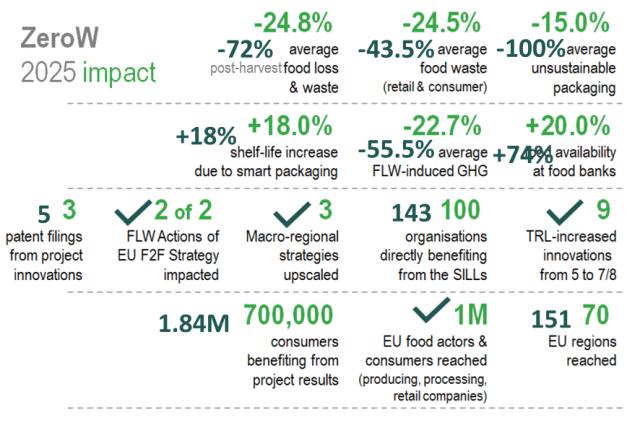
By the end of the project, the demonstrated combined impact of these innovations was striking. Losses right after harvest fell by an average of 72%, far beyond the original expectations. Waste during food processing dropped by more than half, and supermarkets cut their waste by around a third. At home, people reduced their food waste by more than 50%. One solution even replaced all non-recyclable plastic packaging with fully compostable materials. Together, these results show that major reductions in waste are possible without compromising safety, nutrition or affordability.
These actions also made a meaningful difference for the climate. Because wasted food also means wasted energy, land and resources, reducing it has a powerful effect on emissions. Across the supply chain, greenhouse gas emissions linked to food waste fell by 42% to more than 60%. The project helped extend shelf life, improve quality control and increase the amount of safe food available for redistribution. Thanks to better coordination between retailers and food banks, the availability of donated food rose by 74%. Consumers benefited too, with clearer information, healthier meal options and packaging that is both sustainable and practical.
Behind the numbers sits a broader story of resilience and fairness. The solutions tested in ZeroW helped food actors adapt more easily to unexpected challenges, from sudden harvest shifts to last-minute surpluses. Economic assessments showed that the innovations were not only environmentally beneficial but financially sound. Just as importantly, both the costs and the gains were shared more evenly across the supply chain, easing pressure on small producers, food banks and low-income households.
A Collective Effort - and a Clear Way Forward
The project’s success ultimately comes down to collaboration. The nine living labs involved actors in 151 regions and reached almost two million citizens. Along the way, the teams uncovered several persistent barriers that still make food waste reduction harder than it should be, such as inconsistent rules for food donation or gaps in data sharing. These insights fed into practical policy recommendations that can support the EU’s goals for 2030 and 2050. With the right policies and stable investment, the innovations tested in ZeroW could help reduce emissions from food waste by 40% by 2030 and bring Europe steadily closer to near-zero waste by mid-century.
Above all, ZeroW has been a shared effort. Dozens of organisations, researchers, farmers, retailers, food banks, technology developers and citizens contributed their time, ideas and commitment to making this work. Their collective effort has produced new tools, new partnerships and clear evidence that systemic change is both achievable and worthwhile.
As ZeroW concludes, the project leaves behind a strong and hopeful legacy. The solutions are proven, the results are measurable, and the path forward is clearer. Cutting food waste at scale is within reach when we work together.
To all partners, stakeholders and community members who played a part: thank you. Your collaboration has made a genuine difference, and it will continue to guide Europe’s journey towards a fairer, more circular and climate-resilient food system.
More news from ZeroW
Looking Back at ZeroW: Collaboration, Impact and a Clear Way Forward
After four years of ambitious collaboration, ZeroW reaches its conclusion with impressive results and a clear vision for the future. Project Coordinator Anna George shares her reflections as we wrap up this milestone journey.
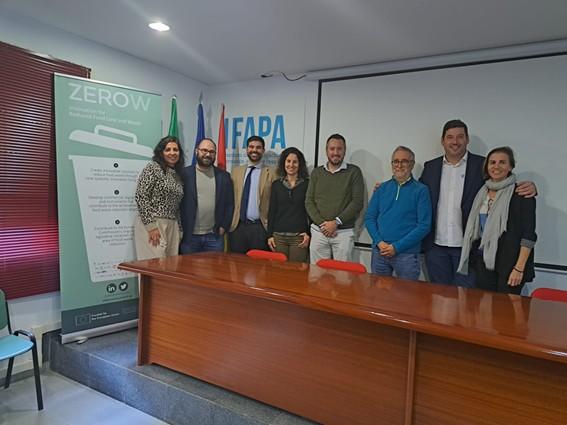
ZeroW Knowledge-Transfer Workshop in Spain Highlights Innovations to Reduce Food Waste
ZeroW partners come together in Almeria to showcase innovative technologies and collaborative strategies aimed at reducing food waste and building a more sustainable food system.
ZeroW Policy Briefs: The Just Transition Towards Near Zero Food Loss and Waste
ZeroW’s policy team has distilled project insights into five briefs that outline how Europe can cut food loss and waste while ensuring fairness, resilience, and progress towards 2030 and 2050 goals.
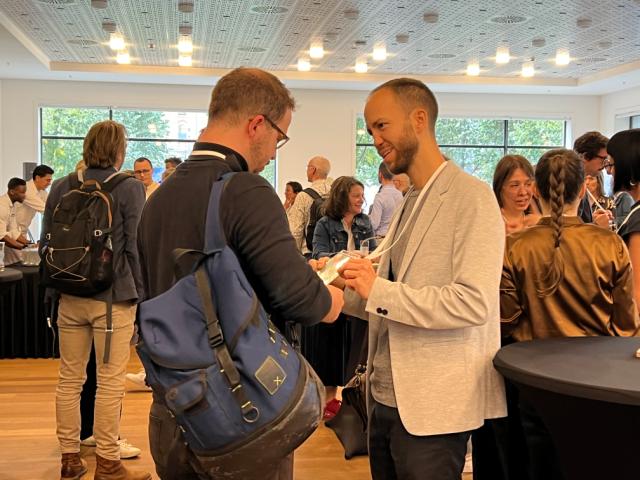
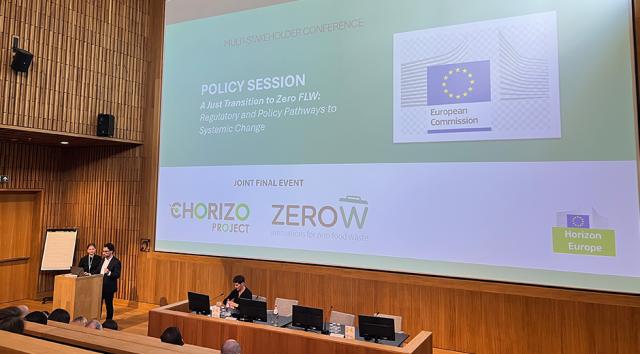
Spotlight on Solutions: ZeroW & CHORIZO Joint Final Conference
On 16 September, the ZeroW and CHORIZO projects held their joint final conference showcasing latest innovations, insigths and solutions to tackle food loss and waste across Europe.
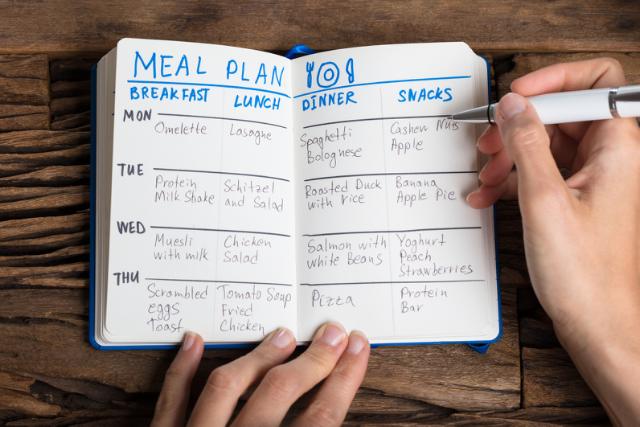
ZeroW Project Open-Sources Smart Meal Planning Prototype to Combat Household Food Waste
ZeroW has launched a smart meal planning prototype - a digital tool that cuts household food waste by aligning shopping and cooking with dietary needs, efficiency, and sustainability, aiming to inspire adoption and scale across Europe.
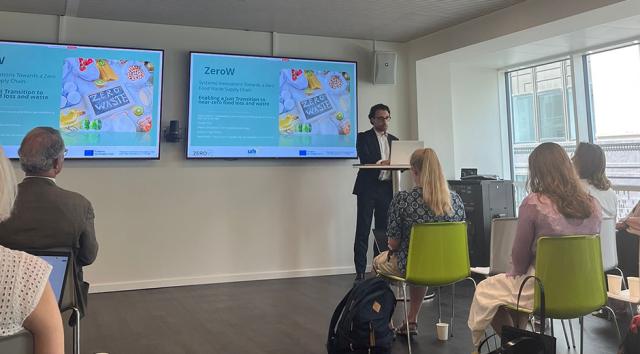
Advancing a Low Carbon Food Value Chain with Policy and Innovation
At a recent EU policy workshop, ZeroW joined key stakeholders from research, industry and the European Commission to present policy recommendations and innovative strategies for reducing greenhouse gas emissions and food loss across the food value chain.
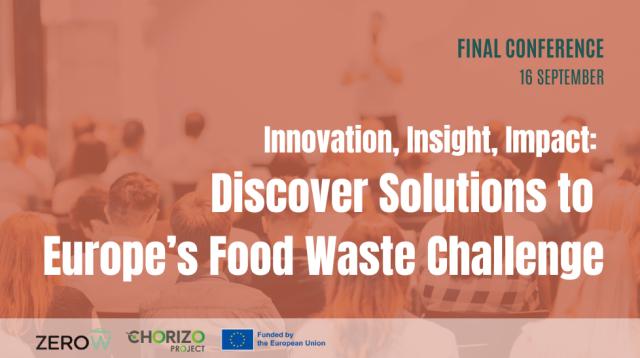
Innovation, Insight, Impact: Discover Solutions to Europe’s Food Waste Challenge
Final Conference
September 16, 2025, 09:30–18:00 CET
Brussels
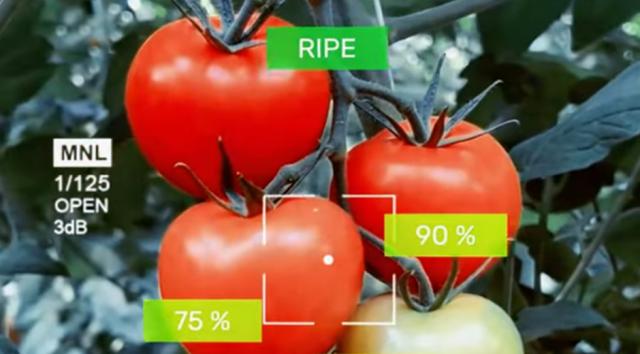
Insights from SILL 3: Smart Computer Vision Helping Greenhouse Producers Cut Food Loss
Advanced computer vision and AI are enabling greenhouse growers to forecast yields more accurately, improve harvest planning, and significantly cut tomato waste at the production stage.
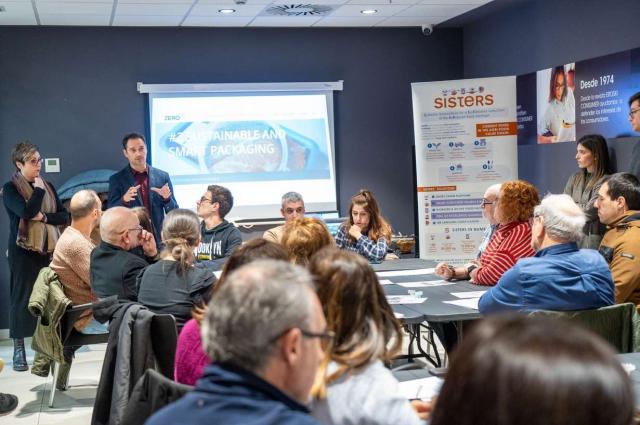
Consumers Back Sustainable Packaging - But Price Still Matters
New survey reveals strong support for eco-friendly and smart packaging, with clear potential for reducing food waste.
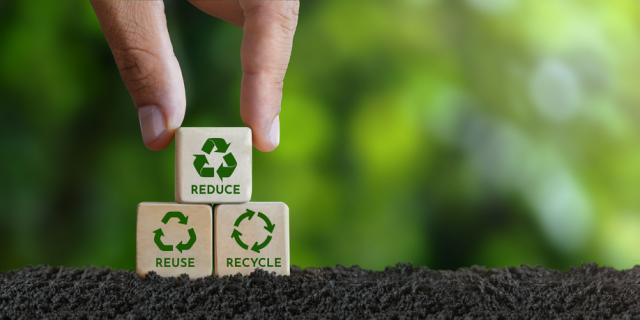
Green Deal Projects Leading the Way in Food Waste Reduction
Green Deal-funded projects are stepping up with innovative solutions based on the 3Rs - reduce, reuse, and recycle. Read Green Deal Projects Support Office’s recent article on tackling food waste in the EU.